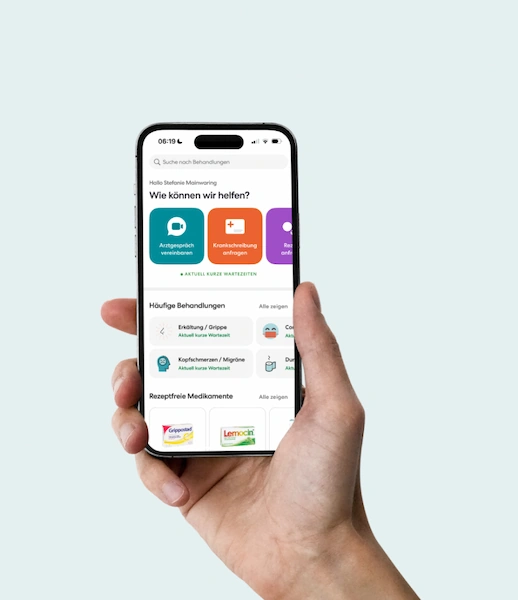

Treatment for fever and sick note directly online*
Fast appointments. Anytime – day and night.
Costs covered by all staturory health insurances and insurance companies

Highest data protection.
Tested by TÜV Saarland.
Treatment for fever and sick note directly online*
Fast appointments. Anytime – day and night.
Kostenübernahme durch alle Krankenkassen und Versicherungen

Höchster Datenschutz.
Geprüft durch den TÜV Saarland.


With digital doctor's appointments, TeleClinic allows you to focus on recovering in your own bed when you are ill, rather than having to sit in a waiting room.
It is particularly convenient that the sick note is available directly in the app. It is also a relief that the prescription can be sent to a pharmacy of your choice.
It's quick and easy to speak to a doctor. For any future reasons for using telemedicine, I will definitely use TeleClinic again. Thank you!
I particularly liked the fact that it took less than two hours and I had my prescription, including app download, registration, login and doctor contact. Thank you very much!
Great. Super easy, no fuss. It saves a lot of time and hassle around doctor's appointments. I'll be using it more often now.
You don't have to leave your bed when you're already feeling unwell, and you don't infect anyone on the way to the doctor or in the waiting room. I think that's great!
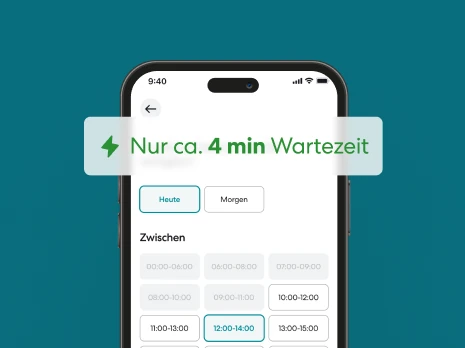
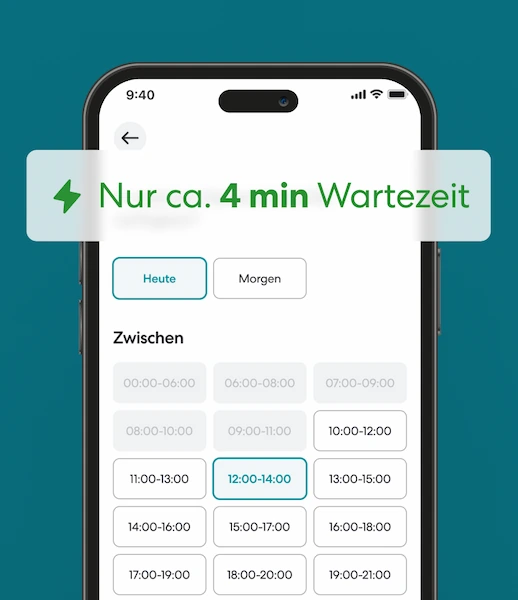
Availability during off-peak hours – quick accessibility within a few minutes
Nur ca. 4 Min. Wartezeit
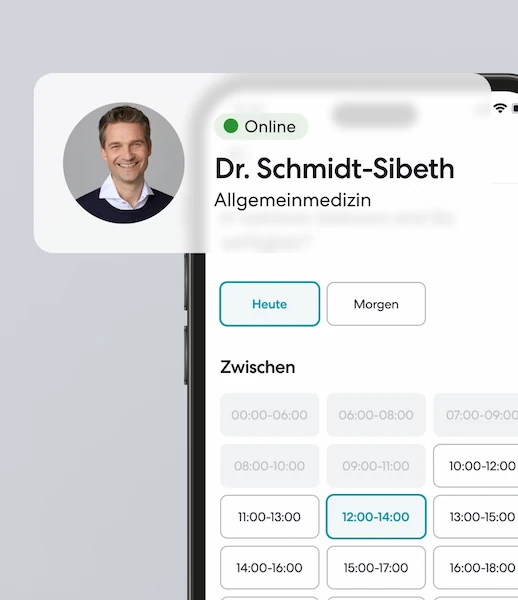
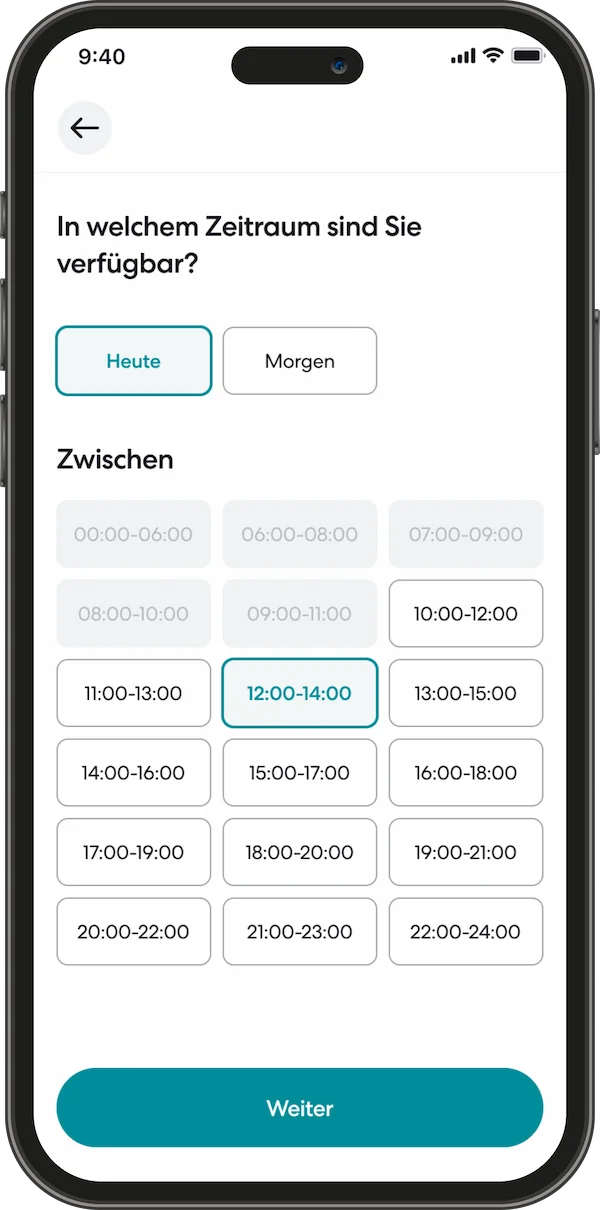
Select desired date
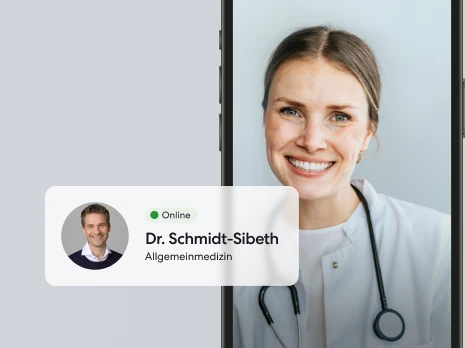
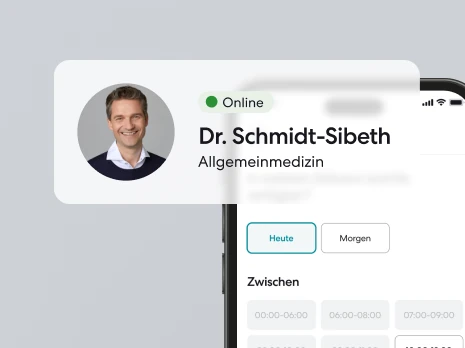
Online
Dr. Schmidt-Sibeth
Allgemeinmedizin
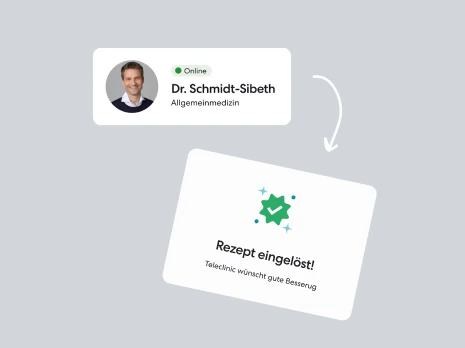
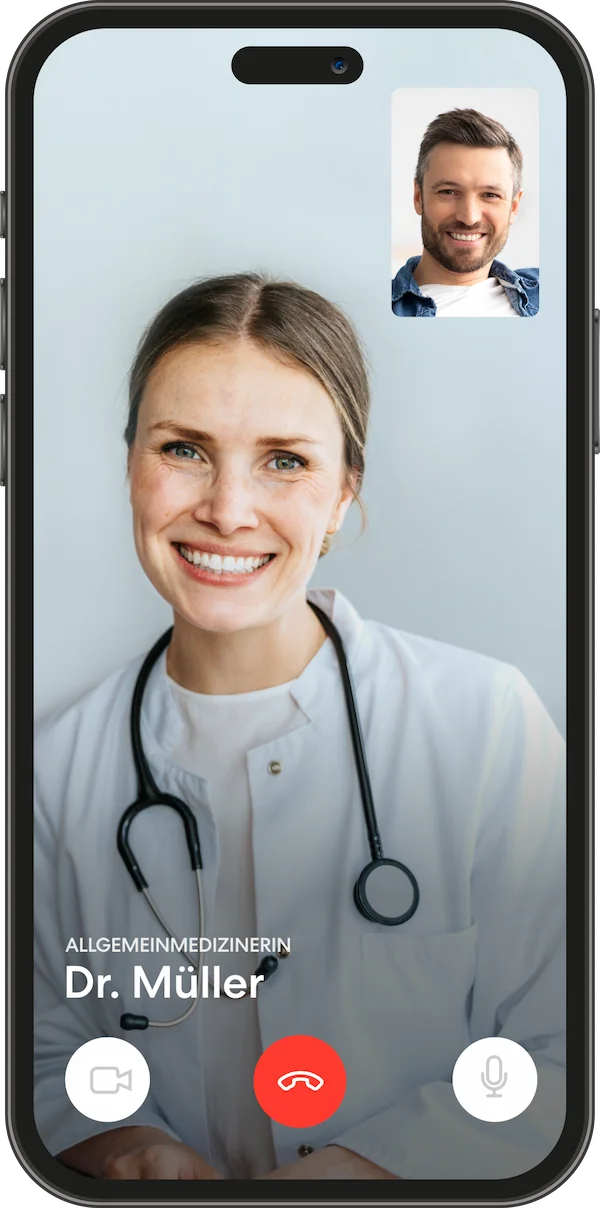
Speak to your doctor directly online
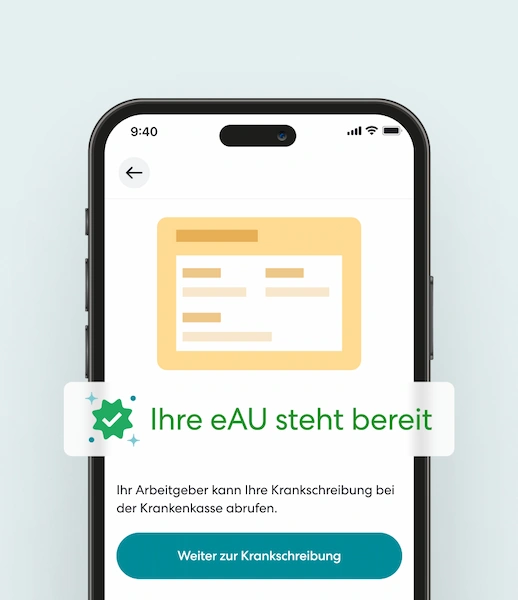
Ihre eAU ist abrufbereit
Receive documents digitally
Jetzt Terminverfügbarkeit prüfen
Schnell den Namen deiner Krankenkasse oder Versicherung eingeben und sofort den nächsten freien Termin prüfen – einfach, schnell und ohne Wartezeit!
app downloads
Frequently asked questions
Will the costs be covered by my health insurance or other insurance?
What do I need to bear in mind with electronic prescriptions or sick notes?
Where can I redeem my prescription?
How long do I have to wait?
How does the digital doctor's appointment work?
Get to know the doctors treating you
All doctors treating patients via TeleClinic are based in Germany and are committed to providing the highest quality of care. They are always available to assist you with general and specific medical enquiries.
The reviews shown have been checked for authenticity by TeleClinic prior to publication and come exclusively from people who have used the TeleClinic platform for treatment. The reviews were obtained as part of a user survey and were selected based on their relevance at the time of evaluation.
Abstract
- Fever refers to a body temperature of more than 38.2 °C.
- With the increased temperature, the immune system fights various pathogens.
- With appropriate treatment of the triggering disease, the fever usually also decreases.
- Antipyretics are only useful if the fever lasts for a long time or rises above 40 °C, but are then necessary.
Definition
Normal body temperature in adults fluctuates between 36.5 °C and 37.4 °C. Doctors speak of fever when temperatures exceed 38.2 °C. In principle, fever is not a disease in its own right, but a symptom. The increased body temperature is a defensive reaction of the immune system and serves to combat pathogens and inflammatory factors.
It is advisable to consult a pediatrician for infants with a body temperature of 38 °C or higher in the first three months. Infants under two years of age require medical attention if the fever lasts longer than one day.
Symptoms
Even a slight fever can weaken the body’s performance. Depending on age, gender and general condition, even slightly elevated temperatures of 38 °C can cause considerable discomfort. As the body temperature rises, the symptoms generally intensify.
The typical accompanying symptoms of febrile illnesses include
- Joint pain
- Tiredness and fatigue
- Headache
- Sweating
- Feeling thirsty
- Dry and coated tongue
- Chills
- Loss of appetite
Causes
Flu viruses are one of the best-known causes of fever. Numerous other infections or autoimmune diseases and tumors also stimulate the immune system to increase the temperature. Doctors distinguish between different types of fever:
| Name | Body temperature (depending on age and constitution) | Possible triggers |
|---|---|---|
| Subfebrile temperature increase | 38.0 °C to 38.5 °C |
|
| Febrile temperature increase | More than 38.5 °C |
|
| Continuous fever |
|
|
| Fluctuating fever (up to 2 °C) |
|
|
| Double-peaked fever (fever rises again after a drop in temperature) |
|
|
| Alternating fever (fever with a regular or irregular sequence of fever-free days) |
|
|
| Periodic fever (slow rise and fall of fever with fever-free days) | Up to 42 °C |
|
Note: Body temperature also fluctuates in healthy people. It is lowest in the morning and rises towards the evening.
Diagnosis
As fever is merely a concomitant symptom of various illnesses, a comprehensive diagnosis may be necessary. First of all, detailed information about the patient’s medical history and the course of the fever as well as a thorough physical examination of the patient lead to a suspected diagnosis.
The following methods can then provide decisive indications of the fever trigger:
- Complete blood count
- Urinalysis
- Endoscopy (endoscopy) in the area of the respiratory tract
- X-rays of the chest
- Ultrasound scans (sonography) of the abdominal organs and kidneys
- Ultrasound examination of the heart
- Tissue samples (biopsy) from the liver, lymph nodes or bone marrow
- Special antibody tests
- Malaria rapid test
- Tuberculin test
Treatment
An elevated body temperature weakens common pathogens. This is because viruses and bacteria adapt to the normal body temperature of 36 to 37 °C. Treatment therefore focuses on the disease causing the fever.
The following measures can alleviate the symptoms that are only caused by the fever itself:
| Body temperature | Measure | Effect |
|---|---|---|
| 38 °C to 39 °C |
|
|
| 39 °C to 40 °C |
|
|
|
||
| more than 40 °C |
|
|
|
|
Tip: Sweating increases the need for fluids. If you have a fever, your body needs half a liter to one liter of additional fluid for every degree above 37 °C every day. Water or unsweetened fruit and herbal teas are suitable.
Should you go to the doctor if you have a fever?
Fever is a normal reaction of the body to infections. In many cases, no medical treatment is necessary, but there are situations in which a visit to the doctor is important. This is especially true if the fever is very high, lasts longer or is accompanied by other symptoms. The correct treatment for a fever depends on the cause.
- A doctor should be consulted if you have a fever above 39 °C.
- Fever that lasts longer than three days requires medical clarification.
- Risk groups such as children, the elderly and the chronically ill should see a doctor early if they have a fever.
What do you have to consider when babies and children have a fever?
Fever in babies and children can be worrying as it is often a sign of infection. It is important to check the temperature regularly and look out for accompanying symptoms. In certain cases, it is advisable to consult a doctor to clarify the cause and initiate the right treatment. You can also consult a doctor with children via video call.
- Babies under three months of age should always have their fever checked by a doctor.
- High fever (over 39 °C) in children requires medical consultation.
- Look out for warning signs such as apathy, refusal to drink or a skin rash.
Questions and answers
When is a fever dangerous?
With a fever of over 40 °C, the body can no longer regulate temperature deviations on its own. In this case, medical treatment with antipyretic medication is necessary. A body temperature of more than 42.6 °C is life-threatening: the heat damages nerve cells and causes proteins in the body to coagulate.
Which thermometer is suitable for taking a temperature?
Two main groups of thermometers are suitable for accurately measuring body temperature:
- A conventional glass contact thermometer provides reliable results when taking a temperature in the bottom or under the tongue. Electronic contact thermometers transmit the data digitally in a shorter measurement period.

- Infrared measuring devices such as an ear thermometer measure the temperature directly at the eardrum. This method is not suitable for newborn babies or those with middle ear infections. In this case, infrared rays measure the temperature with a forehead thermometer. However, this variant leads to measurement inaccuracies.

Where is the measuring accuracy of a clinical thermometer most effective?
Taking a temperature rectally in the bottom has proven to be the most reliable method. The measurement result under the tongue is around 0.5 °C lower. When measured in the eardrum, the result is 0.5 to 1 °C lower than the rectal measurement. At the temple, the measured value deviates by more than 1 °C. Inaccuracies of up to 2 °C occur under the armpit.
How does heat stroke differ from a fever?
During a heat stroke, the temperature rises to more than 40 °C. The lack of sweating and uncontrolled heat production in the body can cause a life-threatening build-up of heat. In addition to the general symptoms of fever, signs of heat stroke include severe cramps, loss of consciousness, rapid heart rate and low blood pressure.
The following steps are necessary as initial measures:
- Move the patient to a cooler environment
- Call an ambulance
- Cool the body (e.g. with cold, damp cloths)
- Administer liquid
- If unconscious, place in recovery position
When does a fever require a sick note?
Fever and accompanying symptoms reduce concentration. The doctor treating you will certify that you are unfit for work for the entire duration of the elevated body temperature. If, for example, there is a risk of infection for colleagues or people under your care – for example in schools or nurseries – sick leave is even mandatory. Anyone who goes to work anyway may face heavy fines.
Sources
- https://www.apotheken-umschau.de/Fieber
- https://www.aerzteblatt.de/archiv/125845/Leitsymptom-Fieber
- https://www.internisten-im-netz.de/krankheiten/fieber/was-ist-fieber/
- https://www.internisten-im-netz.de/krankheiten/fieber/temperatur-regulation-im-koerper.html
Celina von der Linden
- Last updated: 3. June 2026
This TeleClinic guide has been written by our medical editors in accordance with the highest scientific standards. The articles are intended to provide you with initial information on various topics and cannot replace a medical diagnosis. Experienced doctors will be happy to provide you with further advice in an online consultation.
Your health is in good hands
Costs covered by all staturory health insurances and insurance companies
Legally valid
sick note
Electronic prescriptions via the electronic health card or
eRezept app