

Speak to experienced ophthalmologists online
Schnelle Termine. Jederzeit – Tag und Nacht.

Kostenübernahme durch alle Krankenkassen und Versicherungen

Höchster Datenschutz.
Geprüft durch den TÜV Saarland.





















Speak to experienced ophthalmologists online
Schnelle Termine. Jederzeit – Tag und Nacht.
Höchster Datenschutz.
Geprüft durch den TÜV Saarland.

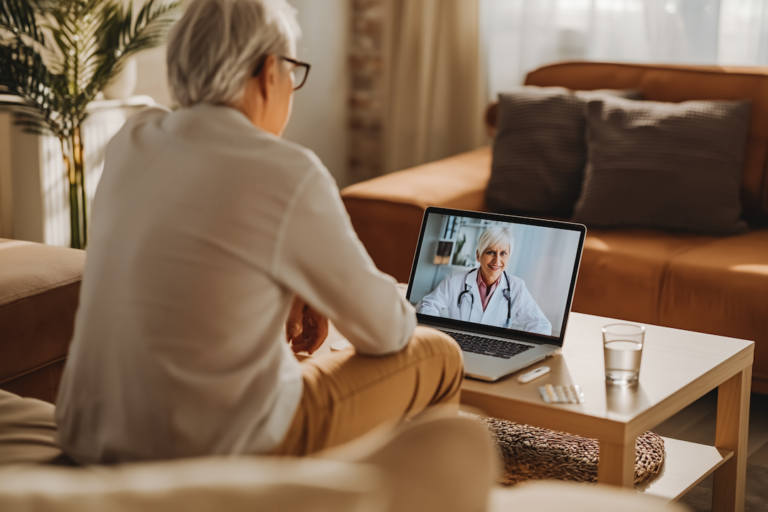
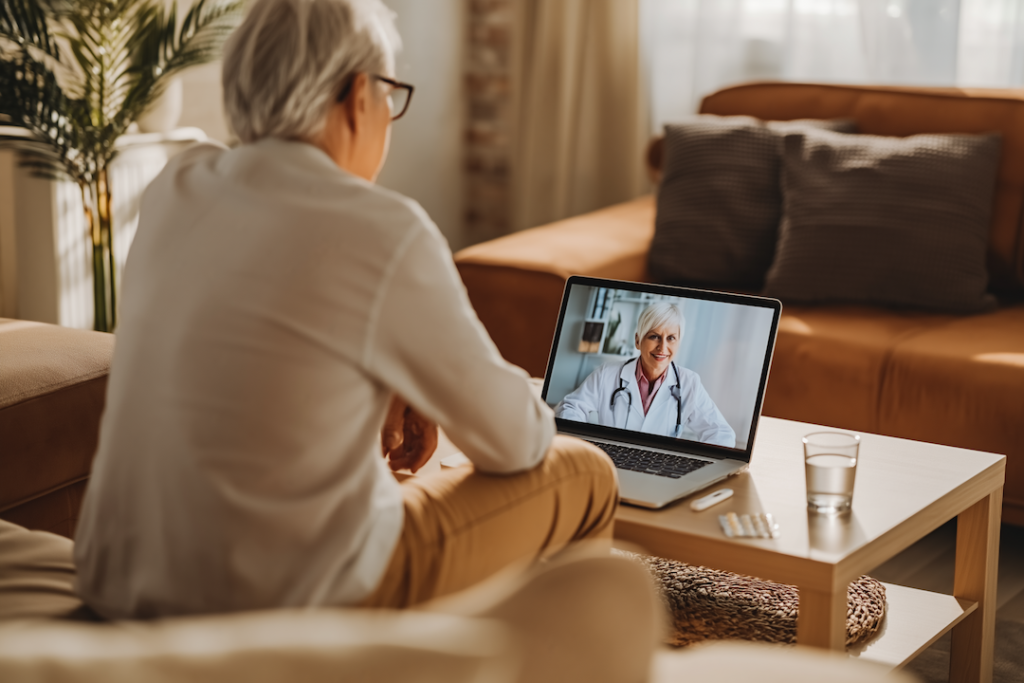
With digital doctor's appointments, TeleClinic allows you to focus on recovering in your own bed when you are ill, rather than having to sit in a waiting room.
It is particularly convenient that the sick note is available directly in the app. It is also a relief that the prescription can be sent to a pharmacy of your choice.
It's quick and easy to speak to a doctor. For any future reasons for using telemedicine, I will definitely use TeleClinic again. Thank you!
I particularly liked the fact that it took less than two hours and I had my prescription, including app download, registration, login and doctor contact. Thank you very much!
Great. Super easy, no fuss. It saves a lot of time and hassle around doctor's appointments. I'll be using it more often now.
You don't have to leave your bed when you're already feeling unwell, and you don't infect anyone on the way to the doctor or in the waiting room. I think that's great!
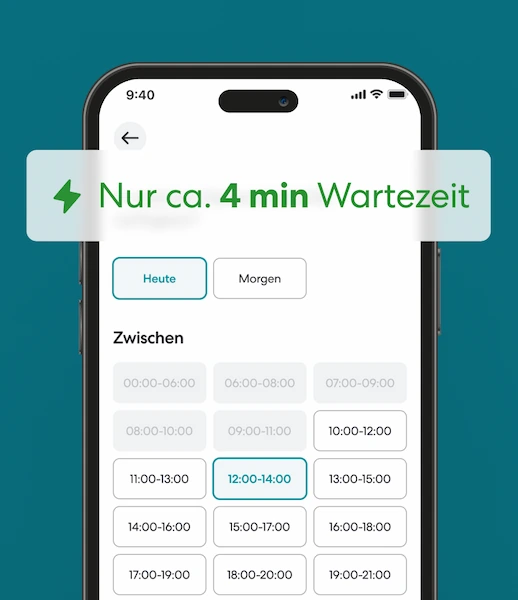
Availability during off-peak hours – quick accessibility within a few minutes

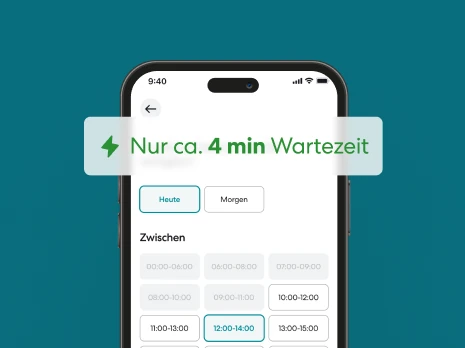
Nur ca. 4 Min. Wartezeit
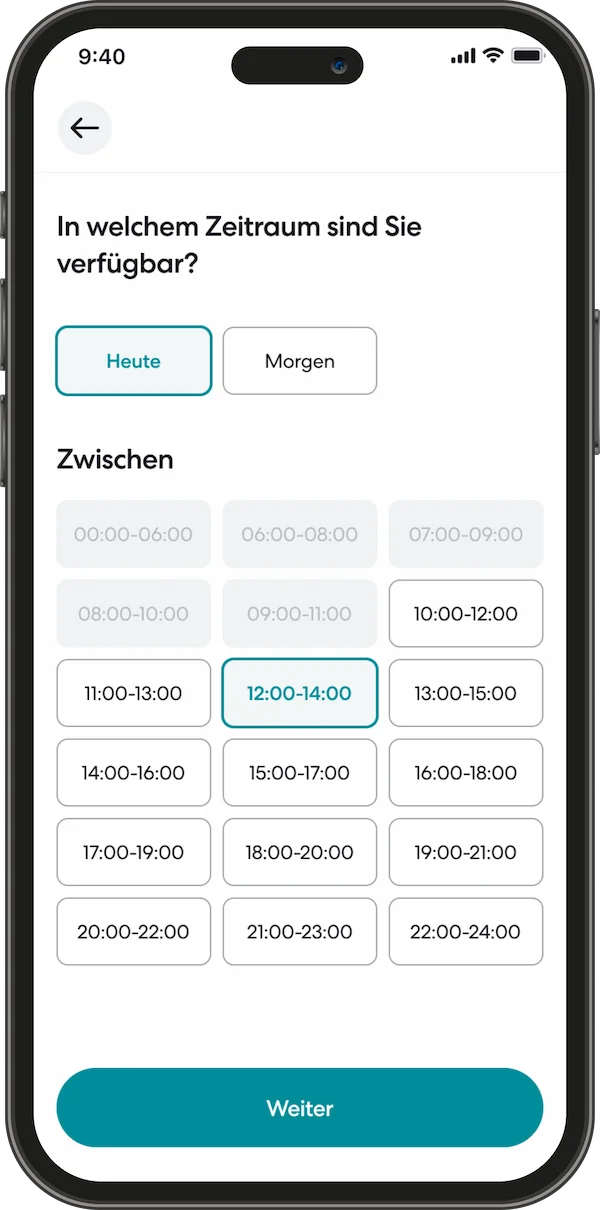

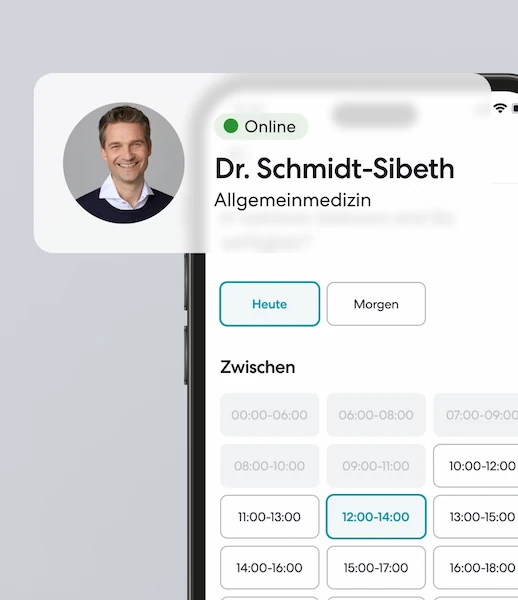
Select desired date

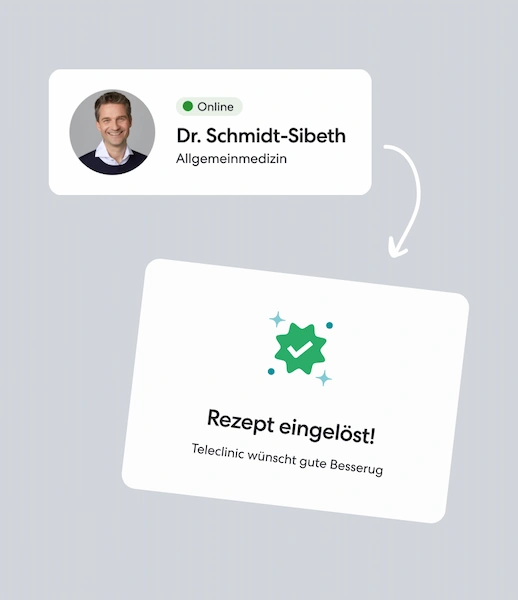
Online
Dr. Schmidt-Sibeth
Allgemeinmedizin
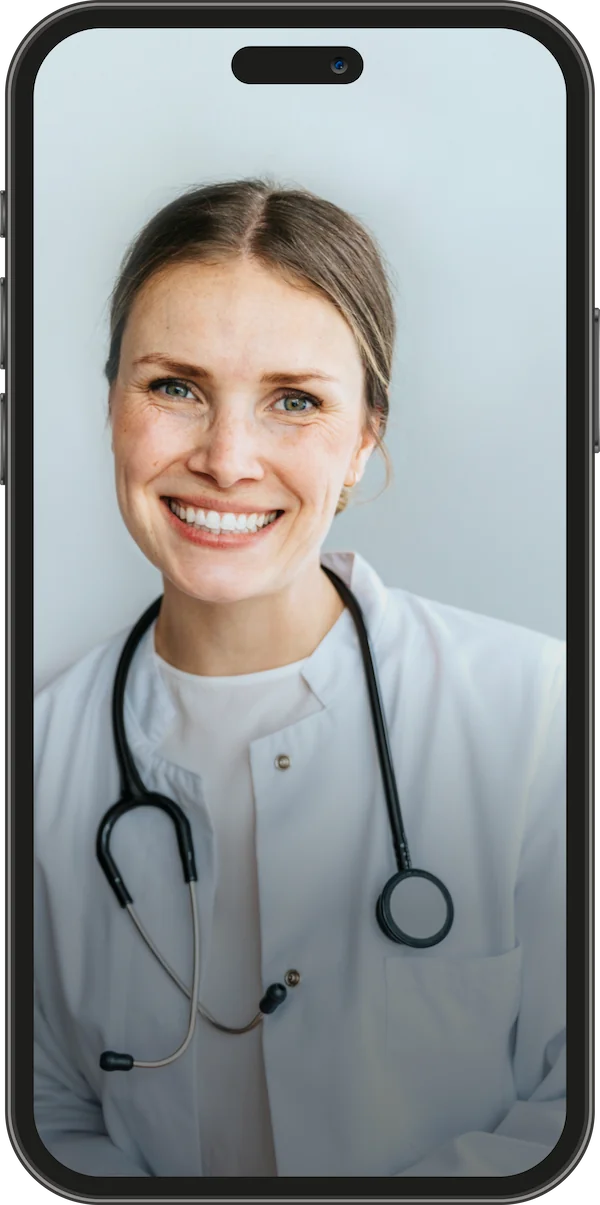

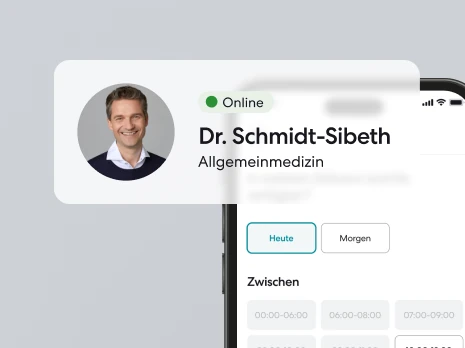
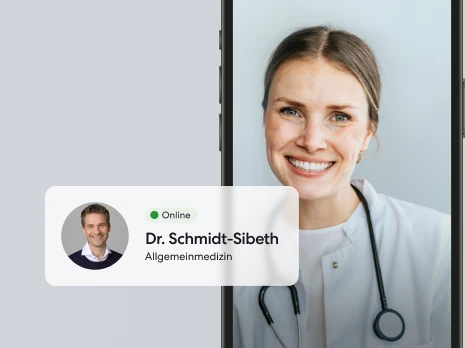
Speak to your doctor directly online

Ihre eAU ist abrufbereit


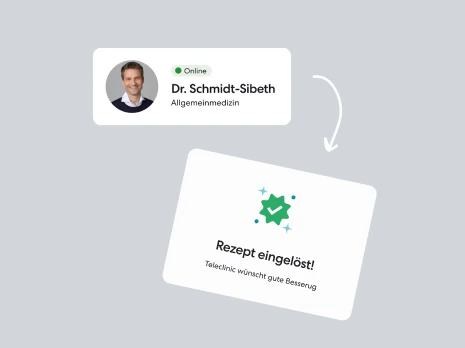
Redeem recipe
Jetzt Terminverfügbarkeit prüfen
Schnell den Namen deiner Krankenkasse oder Versicherung eingeben und sofort den nächsten freien Termin prüfen – einfach, schnell und ohne Wartezeit!



app downloads
Frequently asked questions
Will the costs be covered by my health insurance or other insurance?
What do I need to bear in mind with electronic prescriptions or sick notes?
Where can I redeem my prescription?
How long do I have to wait?
How does the digital doctor's appointment work?






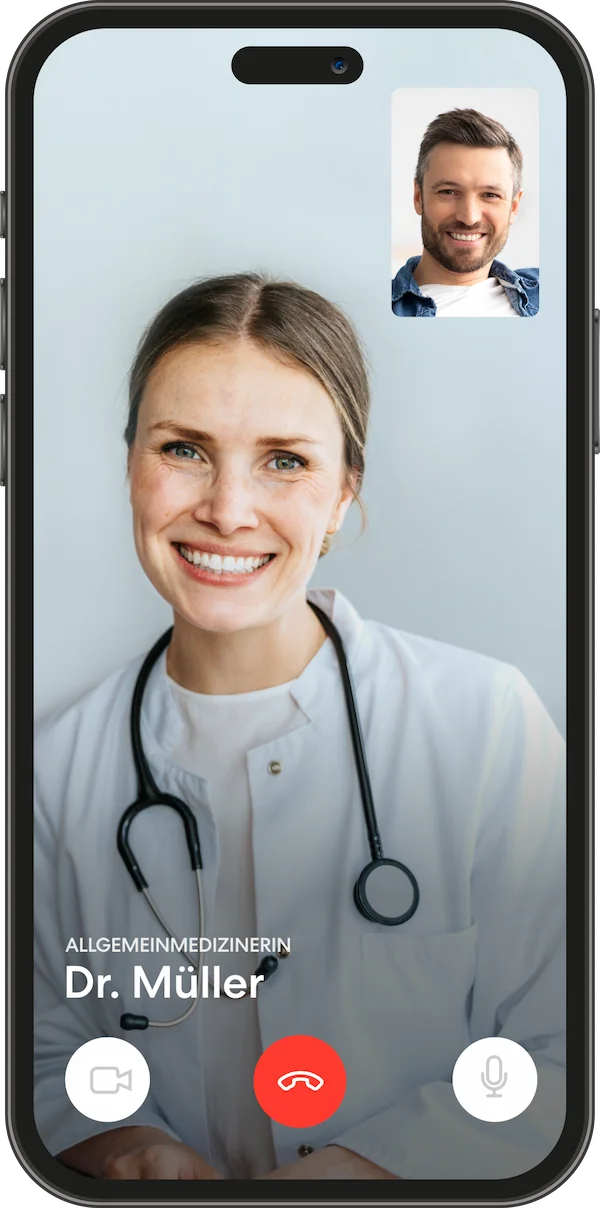
Get to know the doctors treating you
All doctors treating patients via TeleClinic are based in Germany and are committed to providing the highest quality of care. They are always available to assist you with general and specific medical enquiries.
The reviews shown have been checked for authenticity by TeleClinic prior to publication and come exclusively from people who have used the TeleClinic platform for treatment. The reviews were obtained as part of a user survey and were selected based on their relevance at the time of evaluation.

Ophthalmologist’s guide
Find out interesting facts about ophthalmology here – for example, which symptoms you can consult an ophthalmologist about or which common examination methods, specialties and therapies are available.
Abstract:
- The ophthalmologist diagnoses and treats eye diseases. This includes the diagnosis of defective vision, but also the treatment of cataracts, glaucoma, conjunctivitis or styes.
- This complex specialty not only includes the diagnosis and treatment of eye conditions, but is also used in trauma surgery and cosmetic surgery (e.g. cataract surgery).
- Even small children’s eyesight is tested as part of early childhood examinations, and their eyes should also be examined regularly as they get older.
What does a doctor of ophthalmology do?
Ophthalmology, as the treatment of one of the most important and complex sensory organs, is one of the oldest specialties in medicine. The tasks of an ophthalmologist are extensive. Training requires completion of medical school, followed by training as a doctor. It is then possible to specialize with additional one-year training courses in the following areas:
- Laboratory examination
- Laser surgery
- Surgery of the eye muscles
After passing the medical examination, an ophthalmologist performs the following tasks:
- Advice on and early detection of eye diseases such as: Amblyopia (amblyopia), glaucoma (glaucoma) and macular degeneration (diseases of the retina of the eye that affect the macula lutea (“yellow spot”))
- Diagnosis, surgical treatment and follow-up care for diseases of the eye, the visual pathway and the optic nerves
- Measurement of visual acuity and prescription of visual aids or recommendation of vision correction through refractive surgery
- Diagnosis and treatment of positional and movement disorders of the eyes, nystagmus (eye tremor) and forced head postures
- Rehabilitation measures for the visually impaired
- Ergo-, sports- and traffic ophthalmology
In addition to the prevention, aftercare and treatment of eye diseases, ophthalmology includes the following specialties:
- Strabology: diagnosis and treatment of strabismus, eye muscle balance disorders, nystagmus and similar disorders
- Neuroophthalmology: detection and treatment of neurogenic changes in vision
- Refractive surgery: Surgical correction of the refractive power of the eye
Which diseases are particularly common in the ophthalmologist’s practice?
The work of an ophthalmologist includes the diagnosis and conservative treatment of eye diseases, but also prevention and rehabilitation – either in their own practice or in a clinic. Apart from this, ophthalmologists can also perform cosmetic or functional surgical procedures. This includes laser surgery to correct defective vision, as well as the surgical removal of cataracts. The following overview shows you the most common eye diseases:
| Disease | Description of the disease | Symptoms | Causes of the disease | Therapy options |
|---|---|---|---|---|
| Conjunctivitis (inflammation of the conjunctiva ) | Inflammation of the conjunctiva |
|
|
|
| Glaucoma | Damage to the optic nerve and retina |
|
|
|
| Cataracts | Opacity of the lens |
|
|
|
| Retinal detachment | Detachment of the retina from the underlying choroid |
|
|
|
| Macular degeneration | Regression of the macula at the back of the eye (area with the highest density of photoreceptors) |
|
|
|
| Astigmatism (curvature of the cornea) | Often congenital curvature of the cornea |
|
|
|
| Strabismus | Misalignment in which the eyes do not look in the same direction, in various forms |
|
|
|
| Dry eyes | Insufficient production of tear fluid | Dry, reddened eyes |
|
Treatment with tear substitutes, suitable eye drops or gels, lifestyle changes if necessary |
| Sty | Purulent inflammation at the edge of the eyelid | Inflammation at the outer edge of the eyelid and formation of more or less severe swelling | Bacteria, often Staphylococcus | Heals on its own, healing can be promoted by red light irradiation and antibacterial eye drops |
| Myopia | Sharp vision only at short distances | Blurred perception of distant objects |
|
Prescription of a visual aid, alternatively surgical intervention (laser treatment, insertion of an artificial lens) |
| Farsightedness | Sharp vision only at longer distances |
|
|
Prescription of a visual aid, alternatively surgical intervention (laser treatment, insertion of an artificial lens) |
| Night blindness | Insufficient conversion of visual acuity with reduced illumination due to defects in the rod cells |
|
|
Few treatment options
Therapy can be provided for organic diseases that may be the cause |
| Color blindness | Mostly congenital misperception of colors, more common in men than in women | Missing or undifferentiated perception of certain color groups (red blindness, blue blindness) |
|
Special glasses with tinted lenses reduce misperception and sensitivity to glare |
How does the ophthalmologist make a diagnosis?
- A consultation in the practice includes a general examination to check visual acuity as well as a test of the pupil’s normal reaction to light.
- When checking visual acuity, one eye is covered at a time and then tested to see which signs can be clearly recognized from a distance of five metres. The test is then repeated at a distance of 30 centimeters. This is how the ophthalmologist diagnoses the type and severity of a visual defect.
- The conjunctiva and eyelids are also examined. This allows the doctor to determine whether the eye is too dry, for example.
- The scope of the examination may also include Color vision tests, examination of eye position and mobility, examination of the extent of the field of vision.
- If the fundus of the eye is to be examined, the patient is given eye drops containing atropine approximately 30 minutes before the examination in order to dilate the pupil. The doctor can then use strong lighting and a magnifying glass, or alternatively a slit lamp, to examine the back of the eye. The intraocular pressure can also be measured in this way.
- Fluorescence angiography is used to diagnose the condition of the retina even more effectively. For this purpose, the patient is injected with a contrast agent that makes vascular changes in the eye visible.
- In addition to examining the eye and visual acuity, an ophthalmologist’s examination includes questions about the patient’s general state of health and possible chronic diseases. Conditions such as high blood pressure or diabetes, for example, damage the blood vessels and therefore also impair vision in the long term.
Ophthalmologist check-ups – from when?
Ophthalmologists recommend regular consultations from the age of 50 in order to detect diseases such as glaucoma, cataracts and age-related macular degeneration at an early stage. People who suffer from diabetes and hypertension should also see an ophthalmologist regularly. Not all diseases detected early by screening can be completely cured. However, if the diagnosis is made in good time, the progression can be slowed down considerably in many cases.
How can I prepare for my visit to the ophthalmologist?
A visit to an ophthalmologist does not normally require any special preparation. Unlike a blood count, for example, patients do not need to be sober or meet any other requirements. However, the examination of the fundus of the eye is an exception. For this, the doctor administers atropine-based eye drops approximately 30 minutes before the examination. The extract of belladonna, formerly known as belladonna, dilates the pupils and was used as a “beauty remedy” in ancient times.
The administration of atropine makes it easier for the ophthalmologist to illuminate the back of the eye. As the pupils remain dilated for a while, visual acuity is initially impaired after such an examination. For drivers, this means that they should not get behind the wheel again until the effect has completely worn off. There are no precise guidelines for this.
How do ophthalmologists go about treating eye diseases?
Treatment depends on the diagnosis. For example, if you have defective vision – i.e. short-sightedness or long-sightedness – the next step is to prescribe a visual aid. This could be glasses or contact lenses. Alternatively, defective vision can be corrected by surgery under certain circumstances.
- Eye misalignments such as astygmatism or strabismus are also usually treated “mechanically” – with visual aids that take existing misalignments into account.
- If there is an inflammatory disease of the eye, the doctor will first determine the causes and then prescribe appropriate preparations, such as eye drops and/or special creams or gels for the eyelids or eyelid margins. Glaucoma can also be treated with medication to lower the intraocular pressure and thus cure the disease.
- Advanced cataracts are treated surgically. With this procedure, vision can often be completely restored, but surgery can also be successful in the case of macular degeneration. Some ophthalmologists with the appropriate specialization also offer cosmetic procedures in the eye area, such as eyelid lifts.
Special features of eye examinations for children
Children, especially infants and toddlers, cannot communicate fully. Babies also do not yet have fully developed vision. The examination methods must therefore be adapted to the special requirements of very small patients. Abnormalities are often noticed by the pediatrician during postnatal baby and toddler examinations and the young patient is referred to a doctor. Certain tests, such as those for suspected clouding of the lens or misalignments, can be carried out regardless of age; in other suspected cases, diagnostic aids specially developed for small children are used.
Important questions & answers
How long do I have to wait for an appointment with an ophthalmologist?
According to the German Medical Association, a total of 7,497 doctors were working as ophthalmologists in Germany in 2017. 6,188 of them practised as outpatient doctors in their own practice or as employees in an external practice, while a further 1,026 ophthalmologists worked as inpatients in clinics. The remaining ophthalmologists work for public authorities, corporations or in other areas. Depending on where you live, you may have to wait several weeks for an appointment with an ophthalmologist – ophthalmologists are particularly in demand in larger cities with an over-aged population. Emergencies are given priority. However, as you have a free choice of doctor, it is also worth considering doctors’ surgeries in the surrounding area. You are even more flexible if you consult an ophthalmologist online.
Who pays for the ophthalmologist? Which treatments and visual aids are covered by health insurance?
Consultations with ophthalmologists are covered by statutory health insurance. Co-payments, such as prescription fees, may apply. If over-the-counter medication is also required as part of the treatment, the patient pays for this in full. The costs of visual aids are covered for children, but not usually for adult patients.
When should I see an ophthalmologist and when should I see an optician?
Opticians check visual acuity with the help of an eye test and manufacture and fit visual aids. Ophthalmologists are first and foremost medical professionals and are therefore particularly responsible for pathological changes to the eye.
Does the ophthalmologist also fit contact lenses?
The doctor must first determine whether affected patients can tolerate contact lenses. If this is the case, the ophthalmologist can also fit contact lenses.
Do I need a referral from my general practitioner?
Since 2013, referrals are no longer required. However, you should still ask to be referred so that your GP can maintain an overview. This applies in particular if the diagnosis and subsequent treatment of a disease is not left to the ophthalmologist alone, but other specialists need to be consulted – for example, if other diseases are suspected.
When should I see an ophthalmologist?
An ophthalmologist should be consulted if you generally suffer from vision problems, but also if symptoms such as headaches, tension in the neck area, painful or trembling eyes occur. The general rule is: significant loss of vision is the last stage of the disease.
Sources
- https://www.optometrist.de/optometristen/was-macht-ein-optometrist/was-macht-ein-augenarzt
- https://www.gesundheitsinformation.de/welche-augenuntersuchungen-gibt-es.2966.de.html
- https://de.statista.com/statistik/daten/studie/158849/umfrage/aerzte-nach-taetigkeitsbereichen-in-deutschland/
- https://www.aerzteblatt.de/pdf.asp?id=205547

These articles are intended solely to provide you with preliminary information on various topics and are not a substitute for a medical diagnosis. Experienced doctors are available to provide further advice via TeleClinic. We will first assess whether your concern is suitable for a video consultation.
- Last updated: 21. June 2026

Your health is in good hands

Costs covered by all staturory health insurances and insurance companies

Legally valid
sick note
Electronic prescriptions via the electronic health card or
eRezept app
